SuperJob / B2B / Shipped
Hiring analytics for employers
Helping employers understand their recruitment funnel, add the outcomes only they know, and generate their own reports.
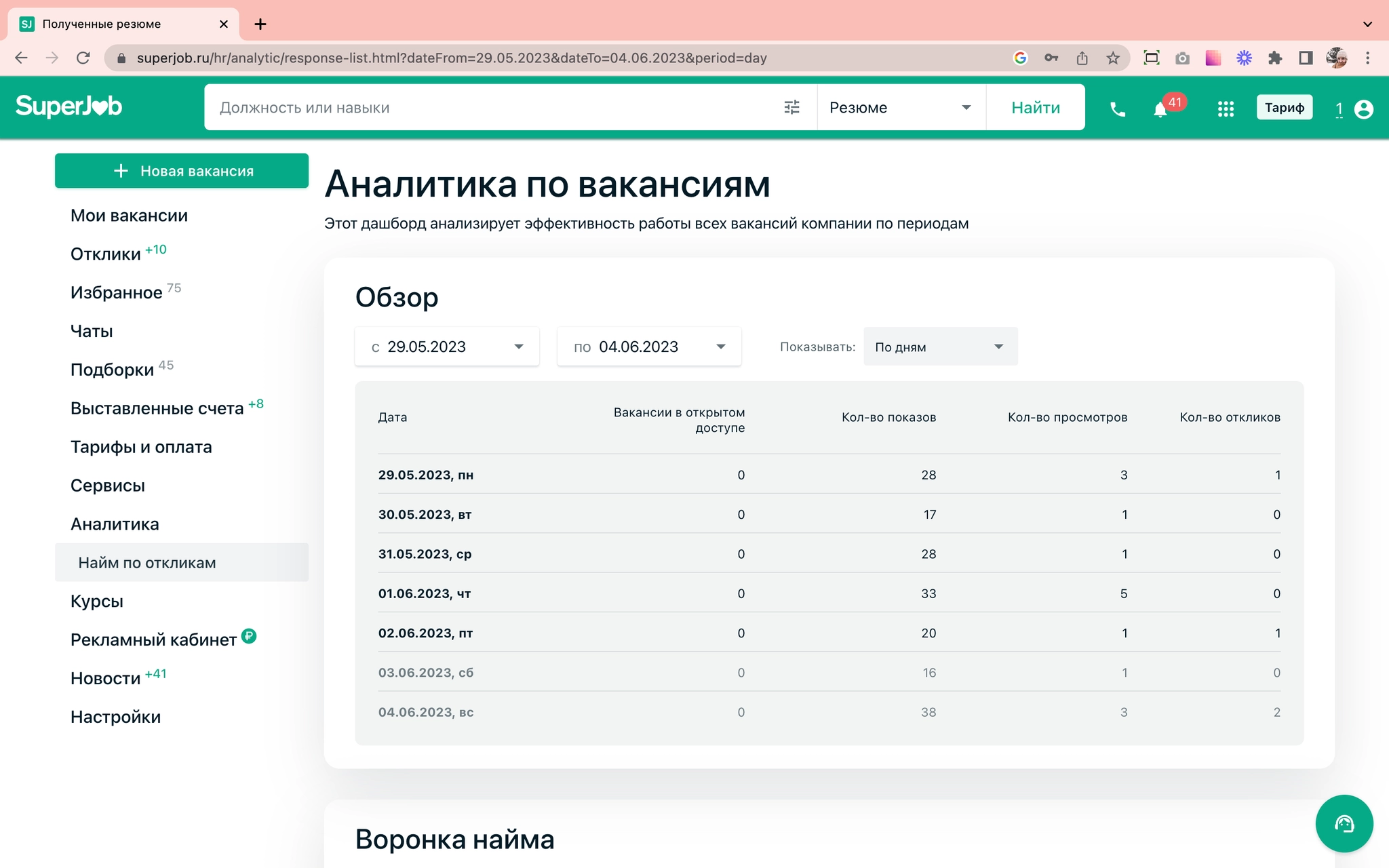
- Period filters let employers choose which data appears in the report.
- The overview compares vacancy performance in one table.
01 / Discovery
The problem and interviews
Employers wanted to understand how their vacancies performed. Some maintained their own spreadsheets or internal systems, while others asked account managers to generate reports.
I interviewed four users spanning mass hiring, smaller businesses and a government institution. The work highlighted two needs: a single view of vacancy performance and reports that employers could filter and download themselves.
swipe →
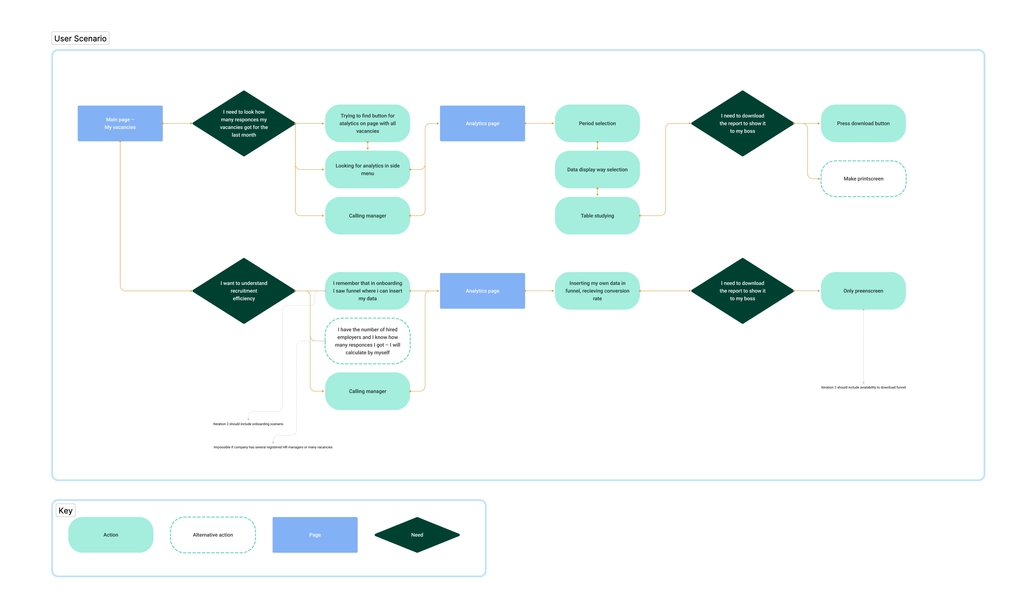
- Decision points separate the routes through analytics.
- Report and data-entry paths are mapped before screen design.
What an employer can do
- Choose a reporting period
Review the performance of vacancies for the dates they need.
- Check the hiring funnel
See where candidates leave the process and read relevant recommendations.
- Add their own results
Enter interviews and hires that happen outside SuperJob.
- Download a report
Get the selected data without asking an account manager.
02 / Key decision
Adding the missing hiring stages
SuperJob could track views and applications, but not every interview or hiring decision. A complete funnel needed input from the employer.
I added fields for the stages employers manage outside SuperJob, and separated these from the figures collected by the platform.
I redesigned the funnel component to support additional stages, larger aggregate values and conversion calculations. Employers could enter processed applications, interviews, invitations and hires.
How the design changed
First version
I started with the existing vacancy statistics component. It showed platform activity, but could not cover the full hiring process.
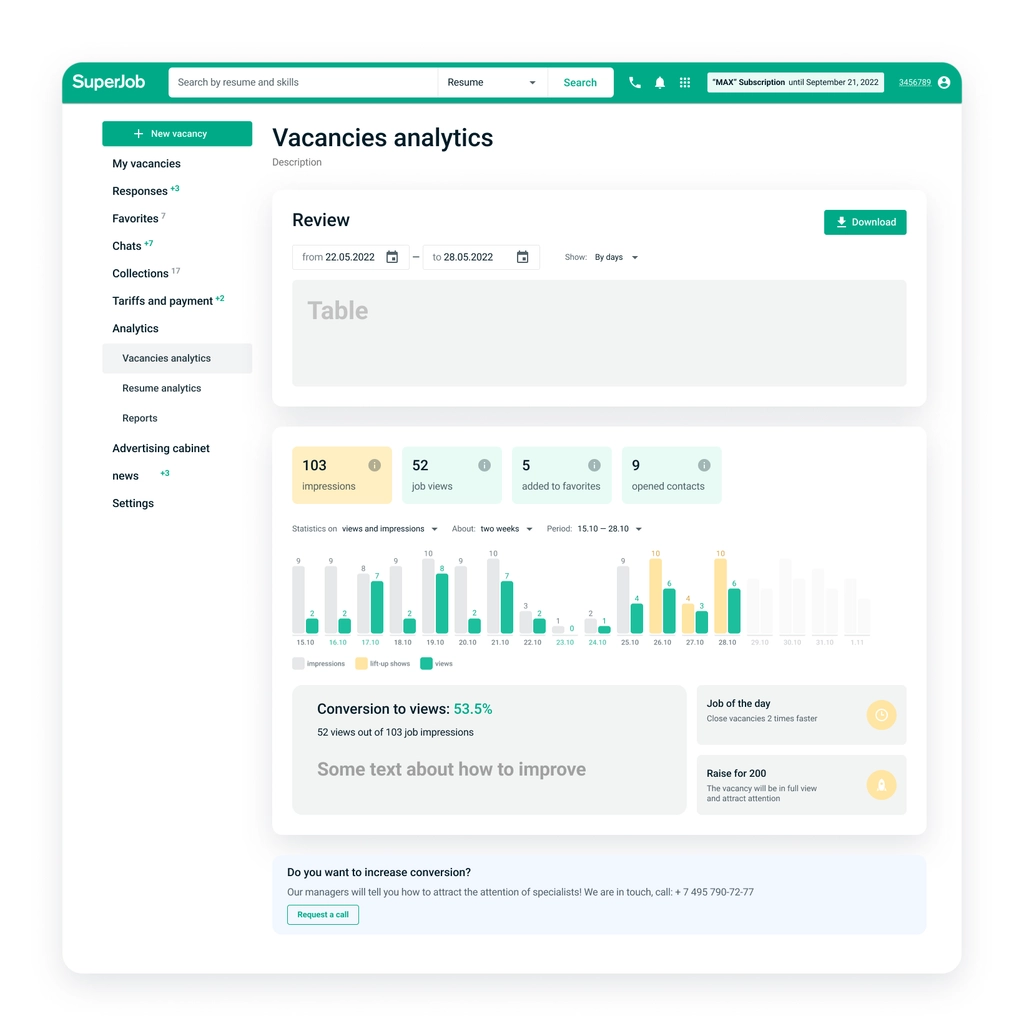
- The first version reused the existing vacancy statistics component.
- Recommendations gave employers a next step after reviewing the figures.
Revised version
I designed a funnel with room for additional stages and larger numbers. Employers could add the results that SuperJob could not track.
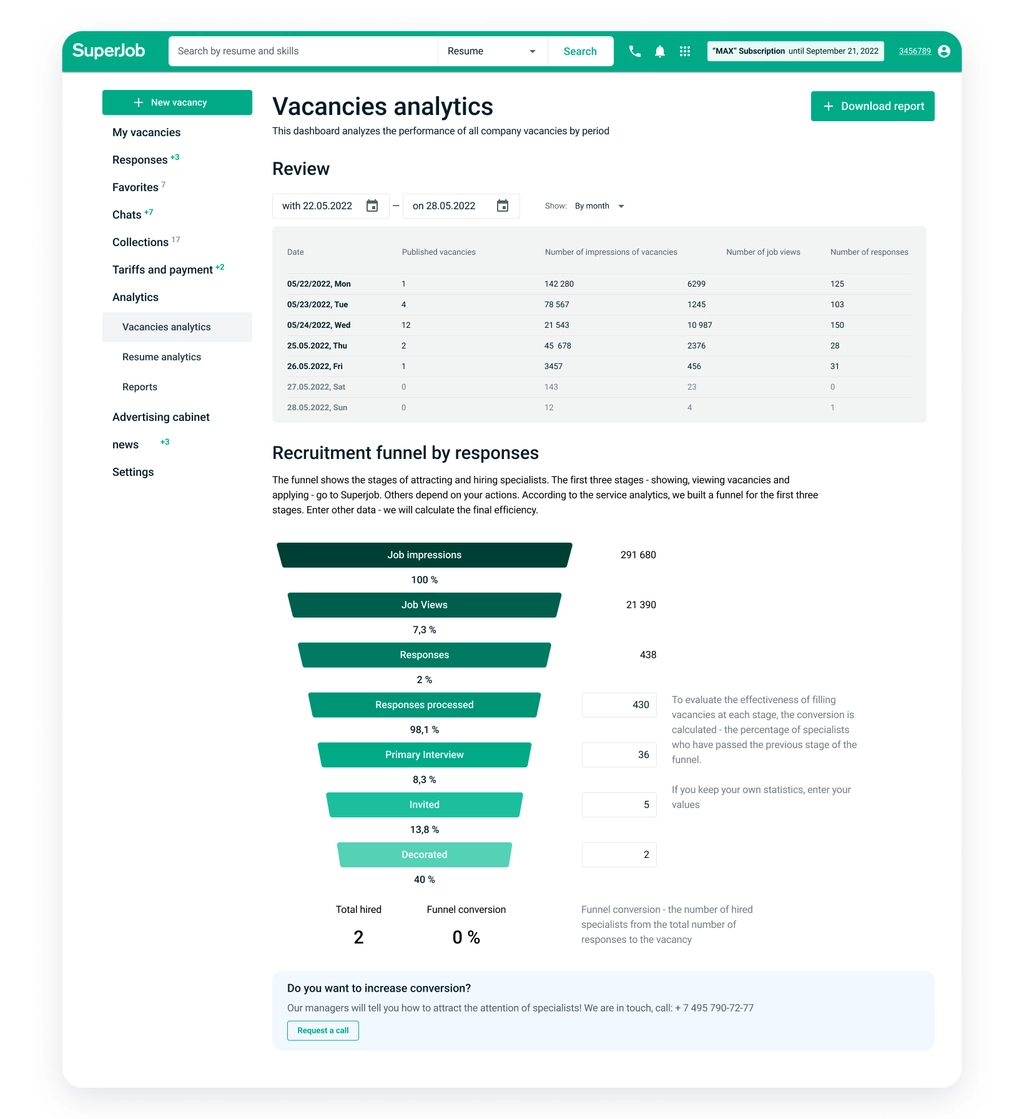
- The hiring funnel adds stages beyond activity tracked by SuperJob.
- Employer input fields capture interviews and hires outside the platform.
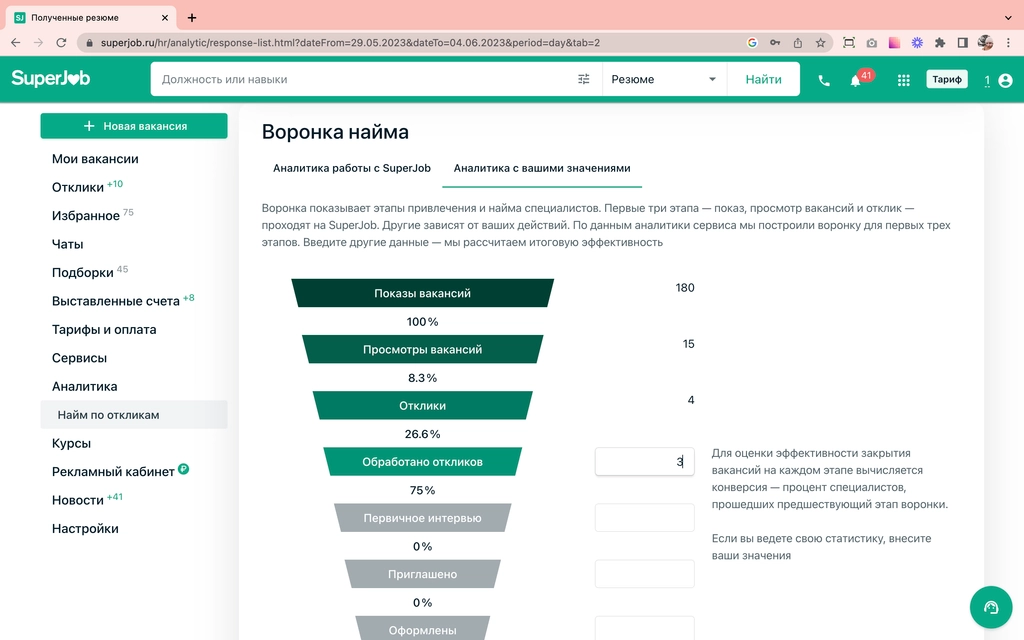
- The funnel shows conversion across the hiring stages.
- Employer input fields fill in the stages the platform cannot track.
03 / Product thinking
Recommendations inside the funnel
I proposed adding recommendations for improving vacancy performance, including relevant free resources and paid promotion options.
The design separated platform analytics with recommendations from the editable funnel. This kept the two purposes understandable while giving employers a next step when they identified weak performance.
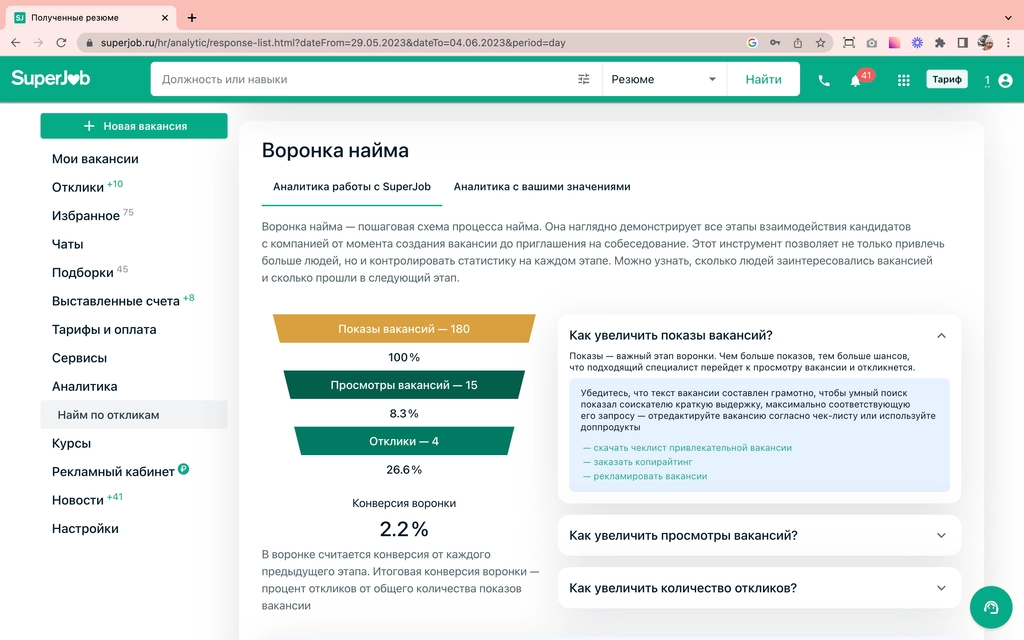
- The funnel helps employers spot where candidates leave the process.
- The recommendations block offers relevant ways to improve vacancy performance.
04 / Validation
Usability testing and handoff
I tested two tasks with ten participants: downloading a report for a selected period, and entering data to inspect conversion in the hiring funnel.
I documented the designs, component variations and calculation rules for engineering.
05 / Results
Results after launch
reduction in calls to managers asking for reports, after the analytics feature launched.
In the first month, reports were downloaded more than 100 times, and more than 3% of active employers tried adding their own data to the funnel.
Next case study
Returning a mistaken transfer